
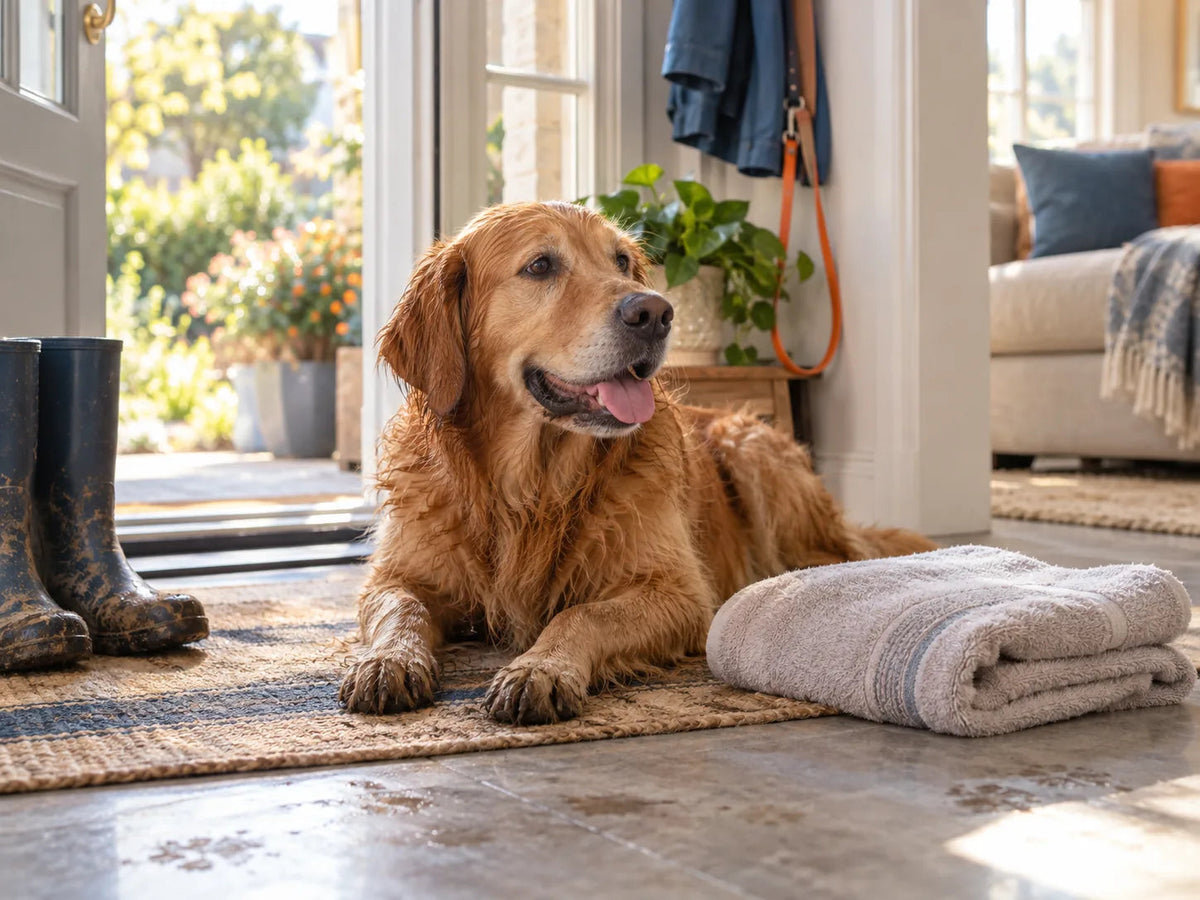
Before muddy paws reach the floor, set out lukewarm water, a soft cloth and a clean towel. Gently rinse or wipe away ordinary mud, check between the toes, then dry each paw. Keep the routine calm and stop if your dog appears sore or distressed.
Prepare a calm place to clean up
Choose a stable, non-slip spot near the door or washing area. Keep the water, cloth and towel within reach so you can support your dog without pulling a leg into an awkward position. Let your dog settle before handling a paw.
Have a paw cleaner or pet-care wipe ready only if it is suitable for your dog and used as directed. A plain damp cloth may be enough for a light mess. Follow any existing veterinary advice for a dog with a skin or paw condition.
Gently remove the mud
Start with one paw at a time. Use a cloth dampened with comfortably lukewarm water to lift loose dirt. If mud is packed onto the paw, rinse gently to loosen it rather than rubbing hard or pulling dried clumps from the hair.
For heavier dirt, use a dog-specific cleanser only as directed, and rinse away residue when the label requires it. The PetMD paw-cleaning guidance describes warm-water cleanup and thorough rinsing after dog shampoo.
If using a cleaning cup, follow that cleaner's fill and use instructions and avoid forcing a reluctant paw inside. Replace dirty water between paws as needed. Household disinfectants, alcohol wipes and unapproved cleaning mixtures do not belong in this routine.
Check between the toes and dry each paw
Gently separate the toes enough to check between the pads and around the nails. Remove loose dirt without digging into the skin. The AKC's paw-care guidance highlights these easily missed spaces and the need to dry them thoroughly.
Use a clean, dry towel to blot the paw, including accessible spaces between the toes. Avoid brisk rubbing on tender skin. Work through all four paws and check for damp areas before letting your dog walk onto a smooth floor.
Wash, dry and store the tools
Empty used water and remove dirt from the cleaning cup, cloth and other tools. Take apart removable pieces only as the product instructions allow. Wash and rinse the parts by the method specified for that item.
Leave tools fully dry before storing or reassembling them. Wash towels and cloths according to their care labels, and let them dry too.
Check for cracked, rough or damaged parts before the next use. Ask about missing care instructions rather than guessing at detergents or heat settings.
Stop if cleaning reveals pain or damage
Routine cleanup is for ordinary dirt on otherwise intact paws. Stop if your dog pulls away in pain, limps, bleeds, has a visible wound, or keeps licking an irritated area. Contact your veterinarian for advice, especially if signs persist or return.
Do not dig out an embedded object or continue scrubbing an injured pad. Seek veterinary help for an injury or suspected chemical exposure. VCA's foot-pad injury guidance explains why damaged pads need prompt attention.
Choose tools for your cleanup routine
Check fit, use and care instructions before choosing a paw cleaner. For a larger cleanup after a muddy outing, check a bathrobe's sizing and fabric-care details as well.